

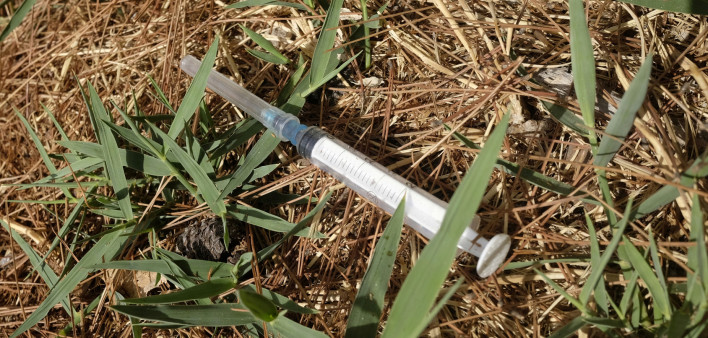
A study published in Clinical Infectious Diseases found that injection drug use is linked to rising rates of overdose, hepatitis and HIV in Appalachia.
“During 2008–2023, we documented successive waves of viral hepatitis and HIV attributed to intravenous drug use against a backdrop of rising rates of fatal drug overdose. Rates of all diseases and conditions were highest in the central Appalachian subregions and were substantially higher than in the non-Appalachian USA,” wrote the study’s authors.
The Appalachian region of the United States, which includes 423 counties that run along the Appalachian Mountains in 13 states from New York to Mississippi, has a complex history of addiction due to its industrial and economic landscape. In the ’90s, Appalachia was targeted by Purdue Pharma’s misleading marketing of the opioid painkiller OxyContin as nonaddictive, leading to high rates of opioid dependence, according to National Affairs. In the 2010s, when heroin and synthetic opioids became more common than opioid pills in Appalachia, injection became the more common route of drug administration, according to the Centers for Disease Control and Prevention.
HIV and hepatitis A, B and C viruses are transmitted through blood and body fluids. Sharing injection drug equipment (like needles, syringes, cookers or drug-preparation equipment) can lead to the spread of these blood-borne viruses. To learn more about the spread of HIV and hepatitis, read POZ’s basics on “HIV Transmission and Risks” and Hep’s basics on hepatitis A, hepatitis B and hepatitis C.
For the study, researchers used National Vital Statistics System and National Notifiable Diseases Surveillance System data to calculate rates of overdoses, hepatitis A, hepatitis B and hepatitis C each year from 2000 to 2023 in Appalachian and non-Appalachian regions. Using the U.S. National HIV Surveillance System, the researchers also calculated annual diagnoses of HIV related to injection drug use for people over age 15 from 2008 to 2023.
Across Appalachia, fatal drug overdose, hepatitis and HIV rates were substantially higher than the rest of the United States; the central Appalachia subregion, which includes Kentucky, Tennessee, Virginia and West Virginia, had the highest rates in the region.
Per 100,000 people, fatal drug overdoses increased 985% from 5.9 to 64 in central Appalachia from 2000 to 2021. In non-Appalachian U.S. areas, rates increased 485% from 5 in 2000 to 29.9 in 2022.
In central Appalachia, the hep A rate peaked at 50 in 2018 (2,173% increase), while the hep A rate peaked at 4.8 in 2019 (30% increase) for the rest of the country. The hep B rates in 2000 were 2.2 for central Appalachia and 2.4 outside of Appalachia. The acute hep B rate in central Appalachia peaked at 7.1 in 2015 (223% increase) but decreased to 0.6 for the rest of the country. The hep C rate rose by 336% in central Appalachia, peaking at 4.8 in 2023, while the rate for non-Appalachian U.S. areas only increased by 88% to 1.5 at its peak in 2023.
The HIV rate increased 380% (from 0.5 to 2.4) in central Appalachia between 2008 and 2021. Meanwhile, elsewhere in the United States, the HIV rate declined from 1.8 to 0.9.
The highest disease burden for HIV and viral hepatitis in central and north central Appalachia was among adults ages 25 to 54. Men and women alike experienced disproportionately higher rates of disease compared with non-Appalachian adults.
“Our data show that fatal overdoses were heavily driven by opioid involvement. Rates of all diseases and conditions increased after 2010 when heroin and synthetic opioids proliferated in the illicit drug supply, and injection became a more common route of drug administration,” wrote the study’s authors.
Due to the social and economic context surrounding these findings, which includes lack of access to addiction medication and treatment, aggressive opioid marketing, economic disadvantage and loss of employment in the coal mining industry, the researchers identified this Appalachian health disparity as a syndemic.
“This syndemic should be addressed with additional resources to provide testing and treatment for infectious diseases, expanded access to medications for opioid use disorder, sufficient sterile injection paraphernalia for all injections, linkage to housing and other needed social services, and policy changes to address social determinants of health, including access to health insurance, and supports for housing, nutrition, employment, and family income,” wrote the study’s authors.




Comments
Comments