

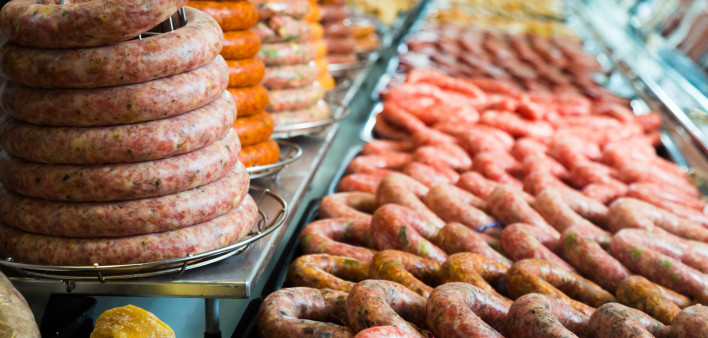
When it comes to the consumption of meat, whether or not the meat is processed is more closely associated with fatty liver disease than whether it comes from red meat or poultry, according to a study published in the Turkish Journal of Gastroenterology. Indeed, every additional ounce of processed meat consumed per day was associated with higher odds of metabolic dysfunction associated-steatotic liver disease (MASLD), while unprocessed meat showed no significant effect.
“Findings from this nationally representative sample of [United States] adults indicate that higher processed meat intake is independently associated with higher odds of MASLD,” wrote the study’s authors.
MASLD, and its more severe form, metabolic dysfunction-associated steatohepatitis (MASH), are responsible for a growing proportion of advanced liver disease worldwide. Estimates suggest that around a third of people in the United States have MASLD, and about 5% have MASH. Over time, the buildup of fat in the liver can lead to serious complications, including cirrhosis and liver cancer. Fatty liver disease often occurs in people with obesity, type 2 diabetes and other metabolic conditions. With only two approved medications (Rezdiffra and Wegovy), management still largely depends on lifestyle changes such as weight loss and exercise.
To learn more about fatty liver disease, check out Hep’s basics on MASLD and MASH.
For the study, researchers analyzed data from the 2017 to 2018 National Health and Nutrition Examination Survey. Participants reported their meat intake in a 24-hour period, noting the number of ounces, processing status (processed or unprocessed) and meat source (red meat or poultry). Fatty liver disease was confirmed by vibration-controlled transient elastography, commonly known as FibroScan, which measures liver stiffness and fat content. Those whose fatty liver disease could be explained by other causes, such as excessive alcohol consumption, hepatitis B or C, medications or high iron levels.
Higher intake of processed meat, either red meat or poultry, was associated with 27% higher odds of MASLD. Those with the highest processed meat intake were 2.46 times more likely to have MASLD than those with the lowest intake. In contrast, consuming unprocessed meat, whether red meat or poultry, was not associated with MASLD.
The researchers also performed a theoretical substitution model that replaced processed meat with the equivalent amount of unprocessed meat. Based on their analyses, this replacement was associated with lower odds of MASLD. Replacing one ounce of processed meat per day with unprocessed meat was associated with 24% lower odds of MASLD.
“These findings may help inform future dietary recommendations aimed at reducing processed meat intake,” wrote the study’s authors. “However, confirmation in longitudinal and interventional studies is warranted.”
To learn more about lifestyle choices linked to fatty liver disease, read Hep stories such as:
- “Higher Vitamin D Levels Linked to Lower Odds of Fatty Liver Disease,”
- “Poor-Quality Sleep Linked to Fatty Liver Disease,”
- “Fast Food Consumption Linked to Fatty Liver Disease” and
- “Alcohol Use Tied to Higher Fatty Liver Disease Risk.”




Comments
Comments