

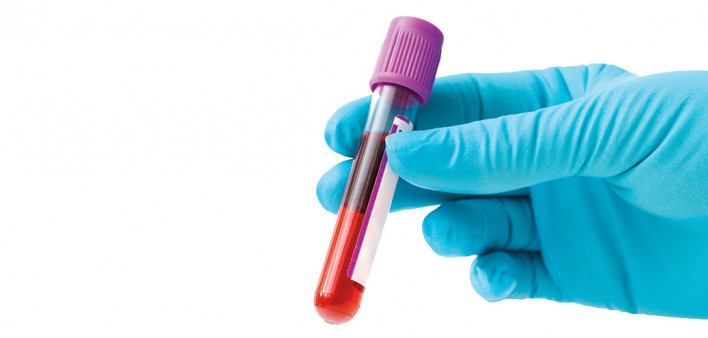
Although “liquid biopsies” have gained attention for their potential to detect multiple cancers in their earliest stages, it’s too soon to tell whether the innovative blood tests are accurate and safe enough for widespread use, according to the findings of a systematic review published in the Annals of Internal Medicine.
“No controlled studies are completed that report benefits of screening with MCD [multicancer detection] tests,” wrote the study authors in their conclusion, adding that “evidence was judged insufficient to evaluate harms and accuracy. Accuracy varies by test and study design.”
Liquid biopsy tests can identify various cancer-related biomarkers—such as proteins and DNA—in body fluids like blood, saliva or urine. This method is cheaper than many other cancer screenings and allows for cancer detection at earlier stages compared with traditional screening methods, which usually identify cancer after symptoms appear or tumors become visible on imaging tests.
Considering that 70% of cancer deaths are caused by malignancies for which there are no screening tests, these MCD tests could improve early cancer detection rates as well as personalized care—that is, if they accurate.
For those already diagnosed with cancer, MCD tests offer a noninvasive way to monitor treatment effectiveness and detect disease relapse or progression early.
The study’s research team was led by Leila C. Kahwati, MD, MPH, the acting chief medical officer of the RTI-University of North Carolina Evidence-based Practice Center. “In this systematic review, we identified no completed controlled studies reporting the impact of screening with MCD tests on cancer detection, mortality or quality of life,” she wrote, according to HealthDay News. “We found insufficient evidence on the accuracy and harms of MCD tests due primarily to study limitations and unknown or inconsistent findings.”
Possible harms include the likelihood of false positives in healthy individuals.
For the study, researchers analyzed the results of 20 studies examining the accuracy of 19 MCD tests. The studies involved more than 109,000 people.
Accuracy varied significantly based on the type of cancer, the involved participants and the study design. Additionally, no evidence has been published showing how useful they are in detecting real-world cancers.
“The most critical limitation is the absence of completed, controlled studies assessing the direct benefits of screening,” researchers wrote.
Researchers emphasize the need for additional studies to confirm the tests’ benefits before they can be widely recommended.
“Despite consistent reductions in disease mortality, cancer remains the second leading cause of death in U.S. adults,” study coauthor David Weinberg, MD, MSC, wrote in an accompanying editorial. “The prevention potential for MCD tests is exciting, but there are insufficient data demonstrating true clinical benefit and how to weigh the balance of that benefit to potential harms.”
Although not approved by the Food and Drug Administration, the liquid biopsy tests OneTest, Galleri and OncoSeek are available for purchase online with a doctor’s note. Earlier this month, Exact Sciences launched Cancerguard, a liquid biopsy test that it claims screens for 50 cancers.
“We are introducing a test, but we are really starting a new era in cancer early detection,” Exact Sciences’ chief medical officer, Tom Beer, MD, told Stat News. “It’s early days, but I think in 10 years, when we look back on today, we won’t believe we used to only screen for a handful of cancers.”
To read more, click #Liquid Biopsy or #Early Detection. There, you’ll see headlines such as “Liquid Biopsies: A Revolution in Early Cancer Detection and Monitoring,” “FDA Approves Blood Test for Colon Cancer” and “Catching Cancer Early.”



Comments
Comments