

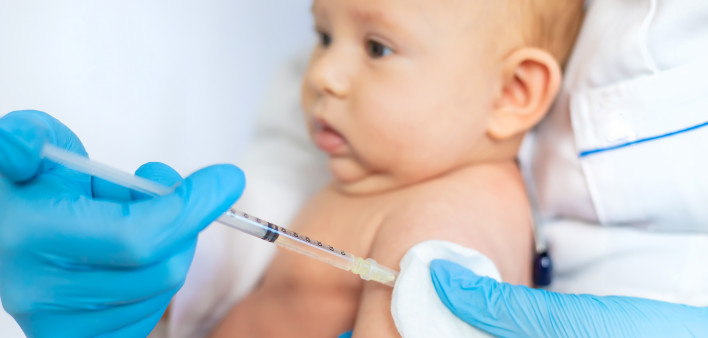
Updated federal guidelines from the Centers for Disease Control and Prevention (CDC) no longer recommend giving the hepatitis B vaccine to all newborns. Instead, they advise that the hepatitis B vaccine be administered only to infants born to women who test positive for the virus and that other parents should discuss with their clinicians whether their infants should get the shots. However, Alaska and Arizona have joined a growing number of states that are adamant in continuing to recommend a dose of the vaccine for all newborns within 24 hours of birth, according to Alaska Public Media and Arizona’s Navajo-Hopi Observer.
Hepatitis B is a highly contagious viral infection that can cause liver damage and lead to liver cancer. It can be acquired at birth from an infected mother, and the virus is easily spread via hep B-positive blood, semen and other body fluids. Close community ties also contribute to transmission between households and families even when people may not live together, and kids can get an infection from touching virus-laden surfaces in the home, noted Robert Lawrence, MD, Alaska’s chief medical officer. For more details, see Hep’s Basics on Hepatitis B Transmission and Risk Factors.
Rates of hepatitis B have historically been high in Alaska, particularly among its Asian and Pacific Islander natives.
“This universal birth dosing helps to ensure every baby receives protection, regardless of their location or access to care or any follow-up challenges that they might have,” said Joe McLaughlin, MD, MPH, state epidemiologist and chief of the Alaska Section of Epidemiology at Alaska Department of Health and Social Services, according to Alaska Public Media. “This approach has definitely helped reduce disparities in hepatitis B outcomes across Alaska for decades.”
A State of Alaska Epidemiology Bulletin reported that during 2010 to 2020, newly reported cases of chronic hepatitis B in the state were almost three times higher than the national average. McLaughlin stressed that these rates showed the state’s residents were at a higher risk of infection. “Our data supports continuing universal birth dose vaccination to protects infants in Alaska,” he added.
Before universal infant immunization became standard procedure, the risk of developing acute infection was as high as 90% for babies exposed to the hepatitis B virus. What’s more, “treatment is every complicated…has a lot of side effects [and] is expensive,” Joel Terriquez, MD, medical director of the Bureau of Infectious Diseases Services and the Bureau of Immunization Services with the Arizona Department of Health Services, told the Navajo-Hopi Observer, a weekly newspaper in Williams, Arizona, another state electing to stick with universal recommendations for vaccination.
“This vaccine has been very successful in the past, and it has been noted to be very safe and effective,” Terriquez added.
In response to a CDC advisory panel’s decision to roll back guidance on universal immunization for infants, the Hepatitis B Foundation issued a statement acknowledging the key role birth dose vaccination plays in safeguarding infants from hep B.
“The hepatitis B vaccine birth dose has proven to be among our most effective tools for protecting infants from a preventable, cancer-causing disease,” the foundation noted. “The committee members dismissed the extensive body of scientific data and real-life experience that prove the necessity, safety and value of the universal birth dose vaccine for hepatitis B.”
After the CDC advisory panel proposed its recommendation, a slew of states including Connecticut, Delaware, Maine, Maryland, Massachusetts, New Jersey, New York, Pennsylvania, Rhode Island and Vermont said they would continue to follow well-established guidance from the American Academy of Pediatrics that all infants receive a dose of the hepatitis B vaccine within one full day of delivery.
“The pediatric vaccine schedule currently adopted in the U.S. is based on decades of research, extensive real-world experience and vetting by well-trained and unbiased medical and public health experts,” said pediatric infectious diseases attending physician Larry K. Kociolek, MD, of Lurie Children’s Hospital of Chicago.
Click here to read a collection of our articles about hepatitis B.



Comments
Comments