

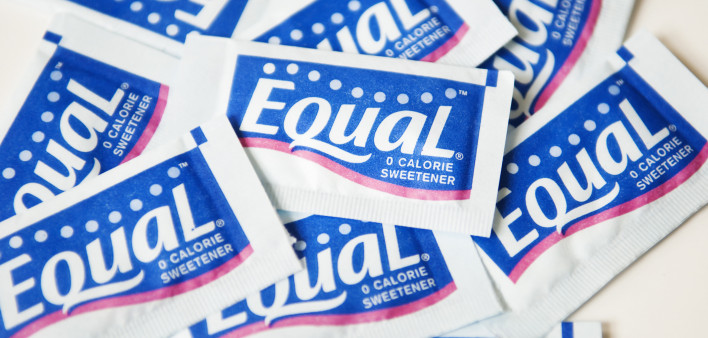
A new study involving experiments with zebrafish details the harmful effects of the artificial sweetener sorbitol on the liver, according to a Washington University Medicine (WashU Medicine) news release.
Sorbitol is a type of sugar alcohol found naturally in some fruits and commercially manufactured to add sweetness and preserve moisture in low-calorie candy, gum and products.
Once sorbitol enters the liver, it is converted into a derivative of fructose, which can increase the risk for metabolic dysfunction-associated steatotic liver disease (MASLD, formerly known as non-alcoholic fatty liver disease). Previous research has found that fructose is a key contributor to MASLD, which affects about 30% of the adult population worldwide.
MASLD and its more severe form, metabolic dysfunction-associated steatohepatitis (MASH), are responsible for a growing proportion of advanced liver disease worldwide. Over time, the buildup of fat in the liver can lead to serious complications, including fibrosis, cirrhosis and liver cancer. Fatty liver disease often occurs in people with obesity, type 2 diabetes and other metabolic conditions.
Study author Gary Patti, PhD, a professor of genetics and medicine at WashU Medicine, said the most surprising finding from the study is that sorbitol is essentially “one transformation away from fructose,” which means it can have similar effects on the liver and other systems.
Glucose levels must be high for the enzyme that produces sorbitol to take effect, however, which is why sorbitol production has mainly been associated with diabetes. Published in Science Signaling, the current study found that even in healthy settings, glucose levels in the gut can become high enough after eating to induce sorbitol production.
While gut bacteria can convert modest levels of sugar alcohol into a harmless bacterial by-product, problems arise when sorbitol levels exceed what the bacteria can degrade. This can happen when excessive amounts of glucose are consumed.
“[Sorbitol] can be produced in the body at significant levels,” Patti said in the release. “But if you have the right bacteria, turns out, it doesn’t matter. However, if you don’t have the right bacteria, that’s when it becomes problematic. Because in those conditions, sorbitol doesn’t get degraded, and, as a result, it is passed on to the liver.”
Artificial sweeteners have long been debated among consumers and health care professionals. This study adds to existing evidence that artificial sweeteners are not as harmless as once thought.
These findings are especially important for people with diabetes and other metabolic disorders, who may rely on products that substitute sorbitol for sugar.
Additionally, Patti has previously published research about how fructose processed in the liver can be hijacked to supercharge cancer cells.
To read more, click #Artificial Sweeteners or #MASLD. There, you’ll see headlines such as “Diet Sodas May Boost Fatty Liver Disease Risk,” “AASLD Updates Practice Guidance for Fatty Liver Disease” and “Low-Carb Diet Offers Benefits for People with Fatty Liver Disease.”




Comments
Comments