

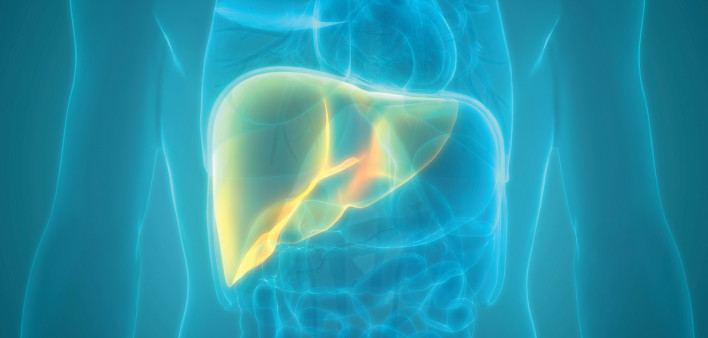
People with both metabolic dysfunction-associated steatotic liver disease (MASLD) and chronic hepatitis B face a substantially higher risks of liver fibrosis and cirrhosis than those with fatty liver disease alone, according to findings from a Chinese study published in Clinical Gastroenterology & Hepatology. The risk of liver disease progression was greatest for those with immune-active hepatitis B, but it was elevated even in the less clearly defined “gray-zone” phase.
MASLD and its more severe form, metabolic dysfunction-associated steatohepatitis (MASH), are responsible for a growing proportion of advanced liver disease worldwide. Over time, the buildup of fat in the liver can lead to fibrosis (scarring), cirrhosis and liver cancer. Chronic hepatitis B virus (HBV) infection can also lead to the same liver complications.
The conditions increasingly occur together, but the impact of chronic viral hepatitis on clinical outcomes among people with fatty liver disease is not fully known. Jie Li, MD, PhD, of Nanjing University in China, and colleagues sought to better understand how MASLD and chronic hepatitis B interact and impact the development of fibrosis and cirrhosis.
The researchers included 6,682 people with MASLD diagnosed via transient elastography (FibroScan) imaging or liver biopsy at 19 centers in China between 2004 and 2025. The study population included 3,979 imaging-based cases (including 351 with concurrent chronic HBV) and 2,703 biopsy-proven cases (including 1,811 with chronic HBV).
In the transient elastography cohort, people with both MASLD and chronic hepatitis B had a higher prevalence of significant fibrosis (50% versus 34%), advanced fibrosis (25% versus 11%) and cirrhosis (16% versus 5%) than those with MALD alone. Similar patterns were observed in the biopsy cohort. Chronic hepatitis B independently increased the risk of fibrosis and cirrhosis in both study cohorts.
Based on guidelines from the American Association for the Study of Liver Diseases, people with chronic hepatitis B can be categorized into five phases: immune-tolerant (high HBV DNA and normal ALT liver enzymes), HBeAg-positive or HBeAg-negative immune-active (elevated HBV DNA and elevated ALT), inactive (low or undetectable HBV DNA and normal ALT), immune clearance (spontaneous or treatment-induced HBsAg loss) and indeterminate, meaning they are in a gray zone with HBV DNA and ALT levels outside the ranges for the other phases.
In this study, people with MASLD and hepatitis B in the immune-active phase had the worst odds of fibrosis and cirrhosis, ranging from 3 to 11 times higher than those with only MASLD. Individuals in the gray zone also had poorer odds, ranging from 3 to 7 times higher than those with fatty liver disease alone.
“In conclusion, concurrent chronic hepatitis B markedly increases the risk of significant fibrosis, advanced fibrosis and cirrhosis in patients with MASLD,” wrote the researchers. “Importantly, this elevated risk is not confined to the immune-active phase but extends to patients in the gray-zone phase—an often underrecognized subgroup. Therefore, enhanced noninvasive
monitoring and individualized management strategies are particularly warranted for patients with MASLD and concomitant active/gray-zone chronic hepatitis B.”
Click here for more news about fatty liver disease.
Click here for more news about hepatitis B.




Comments
Comments