

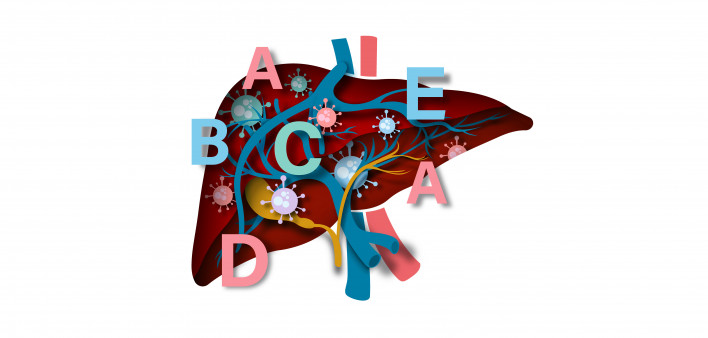
There are five major types of viral hepatitis. While symptoms of acute infection are similar across all these viruses, long-term outcomes differ.
Hepatitis A is transmitted through food or water contaminated with feces. It is an acute form of hepatitis, meaning that it doesn’t cause chronic, or long-term, infection. It usually resolves on its own without treatment, but in some cases, it can cause severe or even fatal liver damage (fulminant hepatitis). Hepatitis A can be prevented with a vaccine, and people who have had it once are usually immune and cannot be infected again.
Hepatitis B is a blood-borne infection that can be transmitted via items that come in contact with blood, such as shared needles or personal items (razors, toothbrushes). It can also be transmitted through sex and from mother to child during pregnancy or delivery. About 90% of people infected as infants develop chronic infection, but most adults clear the virus naturally and recover. Those who develop chronic hepatitis B can be treated with antivirals or pegylated interferon, but this usually does not lead to a cure. Hepatitis B can be prevented with a vaccine, and people who have had it once are usually immune and cannot be infected again.
Hepatitis C is another blood-borne infection that is transmitted in the same ways as hepatitis B. About a quarter of adults clear the virus naturally, but the rest develop chronic infection. Hepatitis C can now easily be treated with direct-acting antivirals taken for two or three months, and more than 90% of those who complete treatment will be cured. However, infection usually does not confer long-lasting immunity, and people can be infected again after natural clearance or treatment. There is no vaccine for hepatitis C.
Hepatitis D, or delta, is a defective virus that occurs only in people with hepatitis B. Coinfection with both hepatitis B and D can lead to more rapid liver disease progression and more severe complications. There are no approved medications for hepatitis D, but several are under study. There is no specific hepatitis D vaccine, but the hepatitis B vaccine prevents hepatitis D as well.
Hepatitis E is transmitted through contaminated food or water, like hepatitis A. It usually resolves on its own without treatment, but it in some cases it causes severe disease, especially in pregnant women. There are vaccines for hepatitis E, but none are approved in the United States, where the virus is uncommon.
Regardless of the cause, symptoms of acute viral hepatitis may include fatigue, nausea, loss of appetite, pain in the upper abdomen, yellowing of the skin and eyes (jaundice), dark urine, pale stools and elevated ALT and AST liver enzymes. These typically last a few weeks, but fatigue can linger for months.
Many people with hepatitis B or C have no early symptoms and are unaware that they have the virus. Over years or decades, however, chronic hepatitis B or C can lead to serious complications, including cirrhosis, liver cancer and the need for a liver transplant.




Comments
Comments