

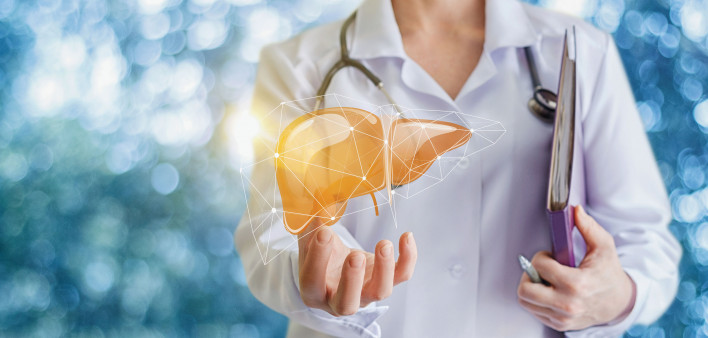
For the first time, the European Medicines Agency (EMA) approved the use of an artificial intelligence (AI) model to help diagnose metabolic dysfunction-associated steatohepatitis (MASH) from liver biopsy samples in clinical trials, according to Reuters.
EMA’s Committee for Medicinal Products for Human Use (CHMP) accepted the use of AIM-MASH AI Assist in clinical trials to help identify the severity of MASH, the more serious form of metabolic dysfunction-associated steatotic liver disease (MASLD, formerly known as non-alcoholic fatty liver disease, or NAFLD).
This marks a significant milestone, as AIM-MASH AI Assist is now the first AI-assisted pathology assessment tool qualified by the EMA’s CHMP for scoring liver biopsies at enrollment for clinical trials and primary or secondary endpoint assessments, according to a PathAI news release.
MASH, which causes swelling in the liver, affects between a quarter and a third of people in the United States, and it’s estimated that rates of MASH are highest among Latinos. Often referred to as “silent diseases,” MASLD and MASH are responsible for a growing proportion of advanced liver disease, mirroring a global rise in obesity.
Because MASH isn’t characterized by many symptoms, many people don’t know they have it. When left untreated, MASH can lead to severe scarring known as cirrhosis as well as long-term liver damage that can advance to liver failure.
AIM-MASH AI Assist uses a machine learning model trained on more than 100,000 annotations from 59 pathologists who assessed over 5,000 liver biopsies across several large clinical trials.
According to Reuters, the tool is designed to help a single pathologist reliably determine disease activity from biopsies with less variability compared with the current standard in trials, which relies on the consensus of three pathologists who may struggle to agree on the severity of inflammation or scarring.
The AI tool will be used to more efficiently evaluate patients for inclusion in Phase 2 and Phase 3 MASH trials as well as for assessing study outcomes based on histological, or tissue, evaluation.
“We are thrilled to receive EMA qualification for AIM-MASH AI Assist,” said PathAI CEO and cofounder, Andy Beck, MD, PhD, in the release. “This achievement underscores our commitment to leveraging AI to transform pathology and improve patient outcomes. We believe that AIM-MASH AI Assist will play a crucial role in advancing MASH research and bringing much-needed therapies to patients.”
To learn more, click #Artificial Intelligence or #MASH. There, you’ll see headlines such as “AI Tool Boosts Enrollment in Clinical Trials,” “AI Identified Hundreds of Missed MASLD Cases” and “AI Algorithm Matches Potential Volunteers to Clinical Trials.”



Comments
Comments