

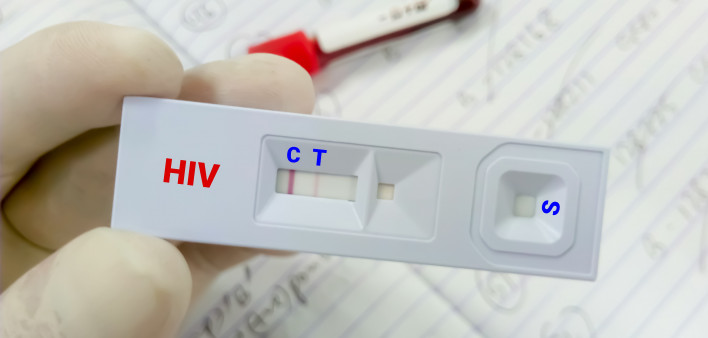
About two years ago, an HIV outbreak was first identified in Penobscot County, Maine, home of Bangor. In recent weeks, the Maine Center for Disease Control and Prevention confirmed another case, bringing the total of new HIV diagnoses in the cluster to 30.
Of note, 29 of those people were coinfected with hepatitis C virus; 29 reported injection drug use within a year of their HIV diagnoses; 27 have been unhoused within a year of diagnoses; 20 were linked to care within 30 days of diagnoses; and 16 of the 27 people currently living in Maine were virally suppressed at their last test.
The outbreak has been fueled by the Trump administration’s war against homelessness and drug use—local harm reduction programs were shuttered, and a homeless encampment has been cleared. Massive federal budget cuts and the government shutdown further hampered efforts to combat the growing HIV and hep C outbreak. (As Stat News reported, Maine sought federal help from epidemiologists at the Centers for Disease Control and Prevention, but the request was paused and the aid never arrived.)
Hence, the number of newly diagnosed people continues to climb.
While this may serve as a warning to other cities and counties across the nation regarding what not to expect from federal health officials in times of need, advocates in Maine are working to meet the challenge.
Bangor Public Health and Community Services launched a new case management program to provide services for the newly diagnosed, reports WGME.com. It marks the first time the city has operated its own case management program, and it is doing so with money from Bangor’s opioid settlement funds.
Connecting newly diagnosed people to HIV care and HIV treatment is vital to curtailing an outbreak. People with HIV who achieve and maintain viral suppression experience slower disease progression, enjoy better overall health and are less likely to develop opportunistic illnesses. What’s more, people with an undetectable viral load don’t transmit HIV to others through sex. This is known as treatment as prevention, or Undetectable Equals Untransmittable (U=U).
Of course, in order to connect people to care and treatment, they first have to be tested. As such, a large part of the local effort to combat the health crisis is ramping up testing opportunities.
Health officials in cities and counties across Maine anticipate the outbreak will spread. As such, they’re stepping up efforts to test for HIV, hep C and sexually transmitted infections, reports the Bangor Daily News.
For example, MaineGeneral Health, a nonprofit based in Augusta that provides HIV and harm reduction services, has expanded its Horizon Program, which offers comprehensive HIV and AIDS services, from nine to 14 counties. Funds for the additional work arrived from a grant thanks to the federal Ryan White HIV/AIDS Program, part of the Department of Health and Human Services.
Whether such funds will be available to Maine—or any other state—in the near future remains an unsettling question. Trump’s proposed budget for fiscal year 2026 slashes HIV funds, including HIV prevention and much of Ryan White services. (For more about this lifesaving program, see “If Congress Ends Ryan White HIV Services, How Many Americans Will Contract HIV?” The answer: researchers predict a 49% spike in cases—or 75,000 excess HIV diagnoses—by 2030.)
About 1.2 million people are living with HIV in the United States, and it’s estimated that about 13% of them don’t know they are positive. What’s more, nearly 40% of new HIV cases are transmitted by people who don’t they are HIV positive.
Meanwhile, it’s estimated that about 2.3 million people in the United States are living with chronic hepatitis C and 862,000 with hep B virus. These numbers will likely climb, spurred by the opioid crisis and injection drug use.
Hepatitis refers to inflammation of the liver. When untreated, it can lead to scarring of the liver (cirrhosis), liver cancer, the need for a liver transplant and death. Hepatitis can be caused by several factors, including toxins, excess alcohol use, autoimmune diseases, fat in the liver and viruses, including the three most common ones: hepatitis A, B and C viruses.
Effective vaccines are available for hep A and B. What’s more, hep C is curable in most cases (but not HIV and hep B).
According to “Hepatitis C Transmission and Risk,” part of Hep’s Basics of Hepatitis, hep C is most easily spread through:
- Sharing needles and other equipment (paraphernalia) used to inject drugs
- Blood transfusions and organ transplants before July 1992
- Sexual contact with someone who has hep C
- Having a mother who had hep C when you were born.
HIV, in contrast, is a virus that attacks the immune system. Over several years, the immune system becomes depleted, and the body isn’t able to fight infections, leading to an AIDS diagnosis. Although there is no cure for HIV, many safe and effective treatments—often just one pill a day—are available. For more, see the Basics of HIV/AIDS in POZ.com, a sister publication of HepMag.com, RealHealthMag.com, CancerHealth.com and TuSaludMag.com.




1 Comment
1 Comment