

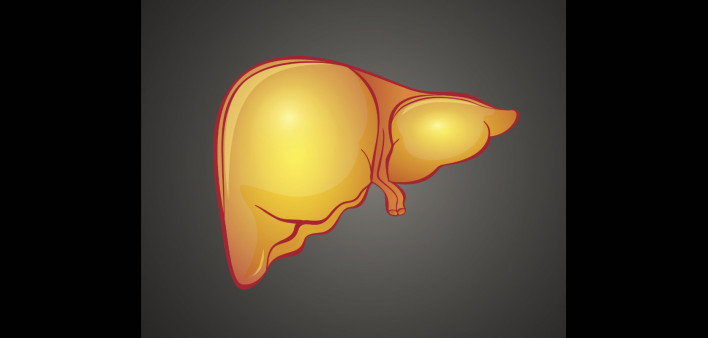
Even after hepatitis C is successfully treated, the risk of liver cancer is not eliminated for people with metabolic dysfunction-associated steatotic liver disease (MASLD) and moderate to severe fibrosis. The new findings, presented at The Liver Meeting 2025, suggest that fatty liver disease is a major driver of hepatocellular carcinoma risk in people cured of hepatitis C.
MASLD and its more severe form, metabolic dysfunction-associated steatohepatitis (MASH), are responsible for a growing proportion of advanced liver disease worldwide. Over time, the buildup of fat in the liver can lead to fibrosis, cirrhosis and hepatocellular carcinoma (HCC), the most common type of liver cancer. While hepatitis C virus (HCV) can be functionally cured with direct-acting antiviral (DAA) therapy, people who have already developed substantial fibrosis or cirrhosis remain at risk for HCC.
Eiichi Ogawa, MD, PhD, of Kyushu University Hospital in Japan, and colleagues sought to understand how fatty liver disease affects liver cancer incidence after hepatitis C is cured.
For their analyses, the researchers looked at medical records from 2,689 Japanese adults in a multicenter database between 2014 and 2025 who had been cured of hepatitis C and had no prior history of liver cancer. Those with decompensated cirrhosis and heavy alcohol use were excluded. Of this population, 36% had MASLD; this subgroup was younger and more likely to be male that those without MASLD. Participants with MASLD also had a higher body mass index and higher levels of the liver enzyme AST and were more likely to have cirrhosis.
Based on their fibrosis scores before being cured of hepatitis C, the participants were split into three groups: low fibrosis (FIB-4 score less than 1.45), medium fibrosis (FIB-4 scores from 1.45 to 3.25) and high fibrosis (FIB-4 score greater than 3.25).
In the first group with low fibrosis scores, no one with or without MASLD was diagnosed with liver cancer over a median six years of follow-up. Among those with medium fibrosis scores, 5.1% of people with MASLD and 1.6% of those without fatty liver disease eventually developed liver cancer after an HCV cure. MASLD was the leading risk factor for liver cancer in this group, followed by male sex, older age and higher serum albumin levels.
Among people with high fibrosis scores, 16.0% of people with MASLD and 9.8% of those without MASLD developed liver cancer during follow-up after a functional cure. MASLD was again the leading risk factor for HCC, followed by male sex, older age, higher alpha-fetoprotein levels and higher serum albumin levels.
Among people with medium or high fibrosis scores, liver cancer incidence was significantly greater for people with MASLD compared to those without fatty liver disease. For both of these groups, however, survival rates were similar for those with or without MASLD.
“MASLD was significantly associated with increased HCC incidence in patients who achieved HCV cure through DAA therapy, regardless of fibrosis stage,” the researchers concluded. “These findings underscore the importance of incorporating MASLD into post-cure risk stratification and highlight the need for tailored surveillance and management strategies.”
Click here for more news about fatty liver disease.
Click here for more reports from the 2025 Liver Meeting.



Comments
Comments